
Walnut Benefits: 10 Science-Backed Reasons to Eat Them Daily
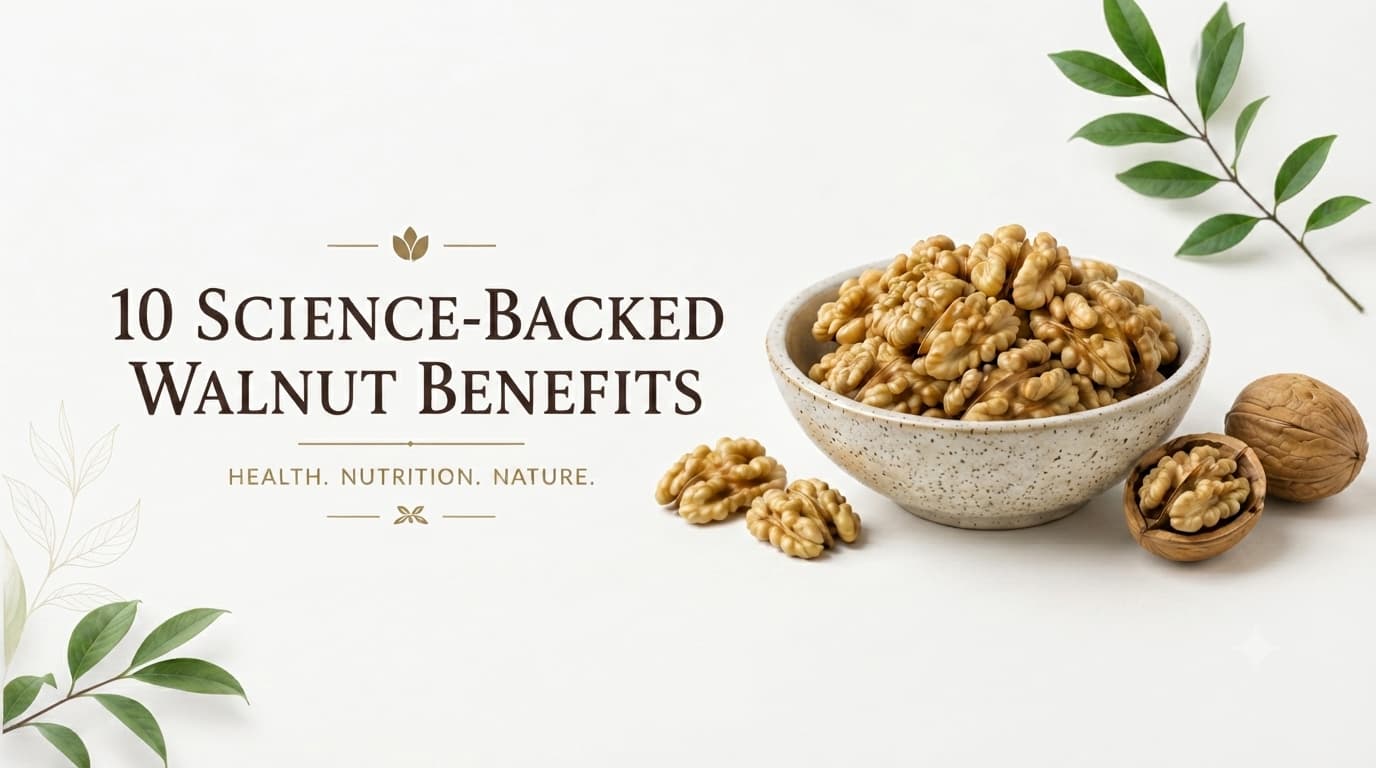
Walnuts are unique among tree nuts and the research that has accumulated around them over the past two decades is more extensive than for any other nut.
From brain health to gut function, from heart protection to better sleep, the walnut's nutritional profile is remarkably well-rounded. Here are ten benefits that the peer-reviewed science consistently supports.
10 Science-Backed Walnut Benefits
1. The Only Tree Nut with an FDA Heart Health Claim
Walnuts are the only tree nut to receive a qualified health claim from the US Food and Drug Administration specifically for their role in reducing cardiovascular disease risk. This is not a marketing claim it is a regulatory recognition based on a substantial body of clinical evidence.
Multiple meta-analyses have found that regular walnut consumption is associated with significant reductions in LDL cholesterol, total cholesterol, and triglycerides across diverse populations.
2. Highest Plant-Based Omega-3 Content of Any Tree Nut

A 30g serving of walnuts provides approximately 2.5g of alpha-linolenic acid (ALA) — the plant-based omega-3 fatty acid.
No other common tree nut comes close to this level. ALA supports cardiovascular health, reduces systemic inflammation, and plays a supporting role in brain cell membrane integrity. For individuals who do not consume oily fish regularly, walnuts are the most practical plant-based omega-3 source available.
3. Exceptional Brain Health Support
Walnuts contain the specific combination of nutrients most associated with cognitive health omega-3 ALA, vitamin E, folate, melatonin, and polyphenols.
Research published in the American Journal of Clinical Nutrition tracking over 700 older adults found that regular walnut consumption was associated with significantly less cognitive decline than in controls. The visual resemblance between a walnut half and a brain lobe is one of nature's more apt coincidences.
4. Natural Melatonin for Better Sleep

Walnuts are one of the few foods that contain melatonin — the hormone the brain produces to regulate sleep-wake cycles.
Dietary melatonin from walnuts contributes to the body's natural sleep regulation, and research has found that consuming walnuts in the evening is associated with higher blood melatonin levels.
For individuals with disrupted sleep patterns, walnuts are a natural, non-pharmaceutical addition to an evening routine.
5. Powerful Antioxidant Profile
The antioxidant activity of walnuts is higher than most other tree nuts and many fruits and vegetables. This activity comes from a unique combination of vitamin E (particularly gamma-tocopherol — a form more potent than the alpha-tocopherol found in most supplements), polyphenols including ellagic acid, and melatonin.
Research published in Food & Function ranked walnuts in the top tier of antioxidant foods tested across all food categories.
6. Supports Gut Health — Prebiotic Effect

A clinical study published in the Journal of Nutrition found that regular walnut consumption increased populations of beneficial Bifidobacteria and Lactobacillus in the gut microbiome — a classic prebiotic effect.
These bacteria are associated with reduced inflammation, improved immune function, and better digestive regularity. The gut health angle is one of the most recently emerging and exciting areas of walnut research.
7. Anti-Inflammatory Properties
Chronic low-grade inflammation is now understood as a central mechanism in cardiovascular disease, metabolic disorders, and cognitive decline.
The polyphenols and omega-3 fatty acids in walnuts act through multiple pathways to reduce inflammatory biomarkers including C-reactive protein and interleukin-6. Research has consistently found lower inflammatory marker levels in regular walnut consumers compared to controls.
8. Supports Healthy Weight Management
Despite being calorie-dense, walnuts are consistently associated with healthy weight maintenance in long-term studies.
The mechanism involves their satiety effect the protein, fibre, and fat combination promotes strong and sustained fullness and possibly a specific effect on appetite-regulating hormones.
Notably, research has found that the body absorbs fewer calories from walnuts than their total calorie count suggests, because some fat passes through without full absorption.
9. Blood Sugar Regulation

Regular walnut consumption is associated with improved insulin sensitivity and reduced fasting blood sugar in multiple clinical studies.
The mechanism is thought to involve the combination of healthy fats reducing insulin resistance and the polyphenols modulating glucose metabolism. A 2018 study in the journal Diabetes, Obesity and Metabolism found significant improvements in glycaemic markers in participants consuming walnuts daily for eight weeks.
10. Male Reproductive Health
A randomised controlled trial published in Biology of Reproduction found that men who consumed 75g of walnuts daily for 12 weeks showed significant improvements in sperm vitality, motility, and morphology compared to controls.
The researchers attributed these effects primarily to the omega-3 and antioxidant content of walnuts, which protect sperm cells from oxidative damage. This benefit is rarely mentioned in mainstream walnut content making it a genuinely distinctive fact worth knowing.
How Many Walnuts Per Day?
Research studies supporting these benefits typically used daily servings of 28–75g. A practical daily target is 28–30g — approximately 7 whole walnuts or 14 halves. This delivers the key benefits without excessive calorie intake.
Why Our Blanched Walnuts?
Our natural blanched walnuts have the bitter skin removed leaving a milder, creamier, more enjoyable eating experience while preserving every nutritional benefit. Sourced from California the world's benchmark walnut region. Free delivery in Hong Kong on orders over HK$395.
Disclaimer: Health benefit claims are based on published peer-reviewed nutritional research. Walnuts are a whole food, not a medicine. Individuals with nut allergies or specific health conditions should consult a healthcare provider.
